
How I Create - From Theatre Script to Finished Illustration
Every illustration begins with recycled paper and paint, then transforms through layers of handcrafted detail. Here's how I work, both for my own collections and commissioned projects.
STEP 1:
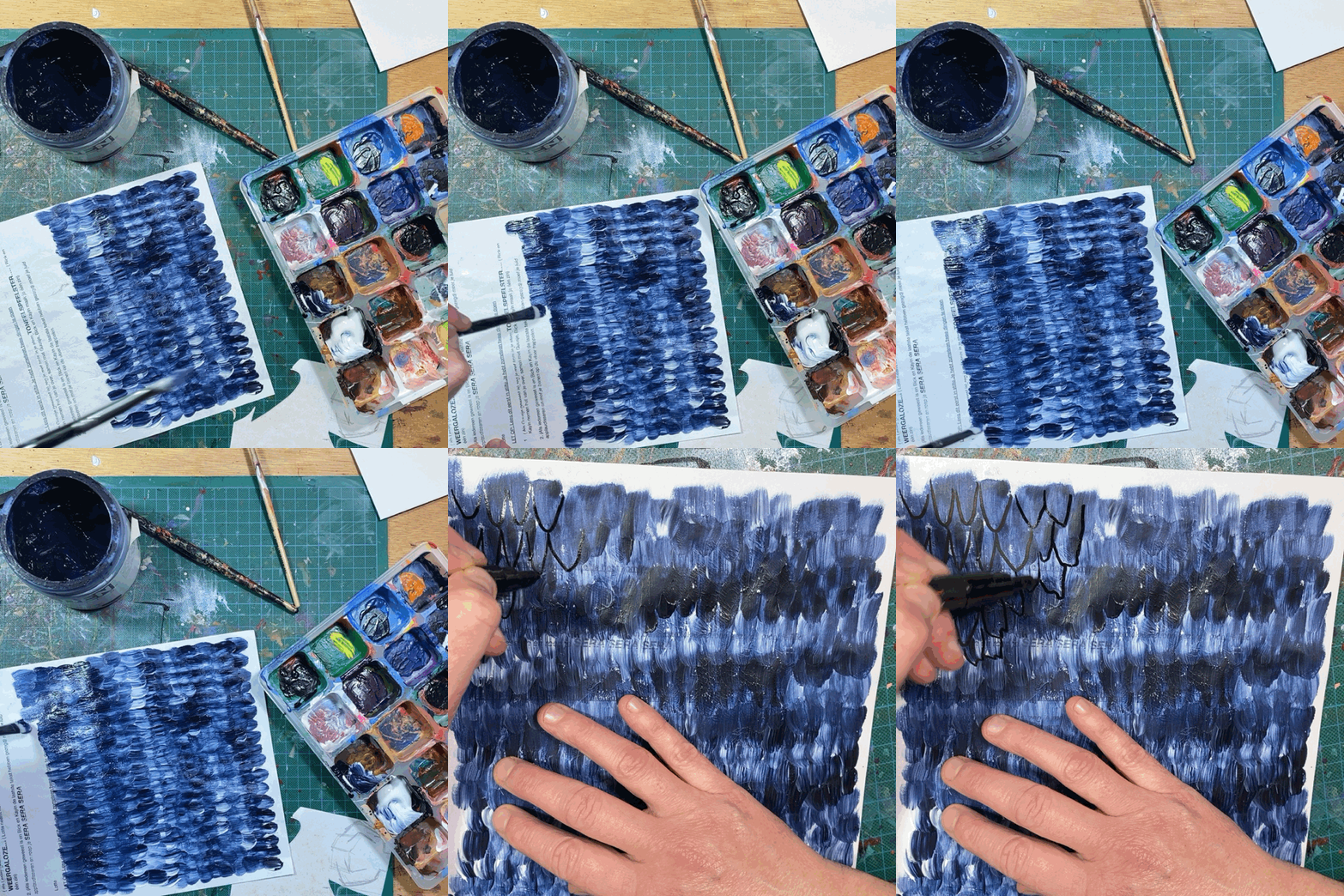
Painting the Foundation & building a library
I begin by painting sheets of recycled paper - often old theatre scripts from my years as a scenographer. They’ve already held stories once, and I like giving them another life.
With acrylics, watercolours, pencils, pens (and sometimes tools that were never meant for painting), I build textures and colour palettes without knowing exactly what they’ll become. There’s no strict plan here. Just play and add layers.
Some papers come together quickly. Others demand time, reworking, and quiet persistence, and that’s where the richness is built.
What this stage gives me:
-
Theatre scripts reborn as textured, vibrant paper
-
Unexpected colour combinations that wouldn’t exist digitally
-
A growing library of painted sheets waiting for their moment
STEP 2:
Cutting & composing motifs
Each shape is cut by hand - slowly and carefully. I add shadows, lines, and small imperfections with paint or handmade stamps or even a spot of paper weaving. I move the pieces around on my desk until they start talking to each other. It’s a bit like casting a play!
What happens here:
-
Individual motifs are hand-cut from painted sheets
-
Details and shading are added by hand
-
Elements begin to form a story before they ever meet a screen